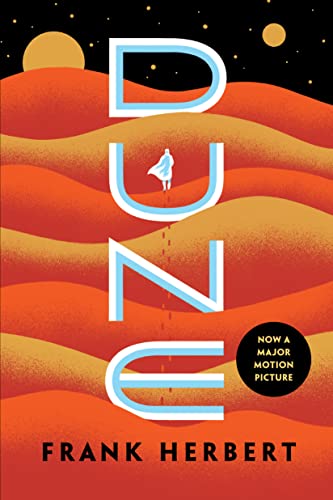
Dune by Frank Herbert is one of the biggest entry points into science fiction. New readers often ask whether they need a complex reading order before starting. The honest answer is no. Start with Dune itself. It gives you the world, the families, the desert, the politics, the religious tension, and the ecological ideas that make the series matter.
Start with Dune
The first book is the foundation. It introduces Arrakis, spice, the Atreides family, the Fremen, and the political machinery around empire. It can feel dense because Herbert does not pause to explain every term in a modern thriller style. That is part of the experience. Read for patterns first: who wants power, who controls resources, who understands the planet, and who is being used as a symbol.
Do not worry if every name or institution is not clear in the first chapters. Dune rewards orientation over speed. Once the central conflict sharpens, the earlier details begin to connect.
What makes Dune different
Dune is not only a space adventure. It is political science fiction, ecological fiction, religious fiction, and a warning about hero worship. Many science fiction books focus on technology. Dune focuses on systems: environment, empire, trade, prophecy, family, and belief. That is why it still feels large decades after publication.
If you are coming from fast modern sci-fi, expect a slower rhythm. If you are coming from fantasy, the houses, desert culture, and chosen-one pressure may feel familiar, but Dune is more suspicious of heroic stories than many fantasy epics.
What to read after Dune
After the first book, you can continue with the next Dune novels if you want to follow Herbert's critique further. If you want a different but related science fiction experience, try Foundation by Isaac Asimov for empire-scale history, Hyperion by Dan Simmons for literary space opera, or The Three-Body Problem by Cixin Liu for civilization-level stakes.
If what you liked was survival and problem solving, Project Hail Mary and The Martian by Andy Weir are more direct and accessible, though very different in tone.
Best reader fit
Dune is best for readers who enjoy layered worlds, political conflict, and stories where the setting shapes every decision. It is less ideal if you want a quick plot with constant action. The book asks you to sit inside a system and watch how pressure changes people.
On Bookble, use Sci-Fi, Space, and Frank Herbert's author page to branch into related books. Dune is a strong first pillar for a science fiction shelf because so many later books respond to its scale, caution, and ambition.
Simple order
For most readers, the best order is: Dune first, then decide whether you want more of Herbert's world or a comparison book. If you want more politics and empire, try Foundation. If you want larger cosmic mystery, try Hyperion. If you want a modern page-turner after a dense classic, try Project Hail Mary. That path keeps your momentum without turning Dune into homework.